
- Details
It is ironic that Malaysia which is blessed with 2,500 mm rainfall annually, should experience water shortages. For many households, especially in Selangor, Kedah, Penang, Pahang, Johor and Kelantan, water is an unreliable source. Water cuts are frequent. Consumers are always stressed and worried; will there be water tomorrow? Or will they be getting in a WhatsApp message that there will be water disruptions because of a burst pipe or read in the newspaper that thousands or even millionsof households will not be having water supply due to contamination at the water processing plant that serves their area. Consumers are even more stressed when a festive season is approaching or they are planning a family event such as a weeding. Will there be water? Water disruptions have become too common, causing stress and pain for consumers and households. Consumers simply have no trust and confidence in the water system in this country.
Three major causes of these water disruptions are broken pipes, water pollution and rapid urbanisation. Broken pipes are the cause of non-revenue water losses. They are also causes of unscheduled water disruptions causing pain and suffering to consumers. Water pollution is perhaps the biggest cause of contaminated water and thus water disruptions to households. Water pollution is primarily caused by industrial waste, sewage and waste water, chemical fertilisers and pesticides, dumping of garbage and leakage from landfills. Deforestation and excessive logging also contribute to water wastage and water contamination. Thirdly, the expanding urban population and the excessive use of water by consumers also leads to water wastage and water shortages.
What is the way forward? Cleary, the responsibility of reliable, safe and affordable water rests on both federal and state government and several agencies. Most importantly, water issues should not be politicised. Water constitutes a basic human need for all. Safe water is necessary for human consumption and to sustain life. Planning for a reliable water supply thus needs a holistic approach. Thus Forum Air Malaysia strongly proposes that federal and state agencies put their differences aside to focus on the need to provide reliable, safe and affordable water to consumers. There should also be greater inter-agency cooperation and collaboration, to ensure especially that water pollution threats are minimised, if not entirely eliminated. There should be greater cooperation and collaboration between state water operators and SPAN, the water regulator to ensure that consumers in the states have access to safe and reliable water. SPAN should focus on regulating and enforcing the water industry to comply with established standards and practices to ensure reliability, safety and affordability of water supply to households. Finally, on the demand side more awareness and education programmes need to be undertaken to promote better water consumption and conservation by consumers. Consumers in Malaysia consume way above the international standards of water consumption. Better awareness and education should promote more responsible water consumption.
Datuk Paul Selva Raj
President, Forum Air Malaysia
- Details
Since 1st July 2017, the motor insurance tariffs have been liberalised. Will this benefit consumers? It depends. Firstly, almost certainly markets benefit from liberalisation. When prices are regulated, there is no incentive to innovate, to target consumers and to take initiatives to provide value that would attract consumers. There is no incentive for service providers to differentiate their products, in relation to consumers, to attract them from other competitors. In theory at least, liberalisation promotes competition in the market and consumers should benefit through a greater range of product or services choices and better value for their hard-earned money. Will consumers then actually benefit? If after the liberalisation, the consumer continues with his old “package” because of “convenience”, and if prices do go up, complain to his friends and family that prices have gone up and maybe gets angry at the whole liberalisation regime, or on the other hand, if prices go down, feels elated that he has saved some money because of the liberalisation and says liberalisation is great; then the consumers have not benefitted from the liberalisation regime. But if on the other hand, when it is time to renew his motor insurance, the consumer, who now has a range of products and services being offered by various competing insurance companies, takes the time and the effort to understand the products and services and makes a conscious choice to get the best value for his money, than liberalisation would have benefitted him.
But this is difficult indeed. Beyond just understanding about third party and comprehensive coverage, the consumer may need to understand other terms such as named driver, special perils like floods coverage, legal liability of passengers, compensation for assessed repair time, car accessories coverage, road assistance coverage and other possible factors that provide value to the consumer. These values would certainly come at a price. Each consumer then has to make comparisons to make the best choice, in terms of value for money, for his particular needs. It is expected that websites comparing insurance value/price packages would crop up. Consumers may need to access these sites to make comparisons to get the best deal. Consumers also in a liberalised regime need to understand a new factor in tariff pricing. Risk. Insurance companies will now look at the risk factors of you as a driver. These would include age, years of driving experience, driving record, claims history, vehicle type and vehicle use. These factors will now be considered in pricing your insurance tariff. For example, a reckless driver with a bad driving record would certainly pay a higher premium than a driver with a “clean” record. Indeed, while liberalisation may be bring benefits to the market and consumer, there is one critical unintended effect. In moving from a regulated to a liberalised tariff environment, it effectively transfers the burden of responsibility on making choices from the agency regulating prices to the consumers in making their own choices for their own best benefit. This requires on the part of the consumer, time and effort in understanding the choices and making the best decision to optimise their needs. While Bank Negara will continue to monitor the pricing regime, insurance companies need to make the options available to consumers easy to understand as well transparent so that consumers can better understand the rationale for the pricing of the packages offered, to enable consumers to make effective choices. Most importantly, FOMCA hopes that more widespread awareness and education be undertaken to empower consumers to make those choices.
Dato’ Paul Selva Raj
Secretary General, FOMCA
- Details
As has been made public last year, the motor insurance industry in Malaysia is heading towards the eventual removal of tariffs, with full market liberalisation to come in 2019. The move will have a huge impact on things for everyone – find out how you will be affected in this article, done in partnership with AIG.
In the automotive world, it’s a major shift, because one won’t be paying for motor insurance on a fixed price basis as is the case now. Currently, motor insurance premiums for comprehensive coverage are determined by a regulated tariff, based on fixed factors such as the sum insured, vehicle model, age and engine capacity.
As such, consumers in Malaysia have been paying a fixed price for their motor insurance, no matter which company they buy that insurance from. Purely based on the set factors mentioned above, all insurance providers will offer the same price for your vehicle comprehensive insurance.
That will soon change, with the roll out of motor insurance liberalisation starting from July 1, 2017. With a liberalised market, fixed insurance premiums based on set tariffs and price lists will be a thing of the past in Malaysia.
Instead of relying purely on the overly simplistic set factors above, your own risk profile will also be taken into account in the new liberalised market. Essentially, you could pay less – or more – to insure your ride, depending on a number of new factors (detailed below).
This also means that theoretically, no two insurers will have identical pricing for a motor comprehensive policy. With a liberalised market, consumers will have the ability to shop around and compare motor insurance products with different prices and value added items.
It’s going to eventually be a very open and highly competitive marketplace, and perhaps a little confusing at the start. In partnership with AIG, we ran a quick survey on paultan.org to find out how much you may know about motor insurance liberalisation.
We had over 4,400 respondents within a week – thanks again for that, very much appreciated – and the statistics are quite interesting: while only 42% of respondents are aware that motor insurance is currently a tariffed product in Malaysia, up to 83% think motor insurance liberalisation will have an impact on their next motor insurance renewal.
This is quite telling, really. While the exact details and parameters of the market liberalisation – whether at the starting stage or full-on detariffication when it comes – have not been made public just yet, motorists are pretty much aware that there is a big change coming, and that it will make a difference on how they choose insurance providers.
Why and how will it change your decision making?
Unsurprisingly, 89% of the survey respondents will choose the insurer that offers the most competitive pricing and value. What Malaysians deem as competitive pricing will be an interesting space to watch. Clearly, while price is a determining factor for most consumers, it is equally clear that research will be a key activity before a buy decision.
That in itself is a big change from the current system. Under a tariffed market, your insurance premium will be the same regardless of your preferred insurance provider, as explained above. For the same vehicle (identical sum insured), plus identical add-on products, you’ll pay the same amount wherever you go.
That won’t be the case once market liberalisation kicks in. Insurance providers will then have a more open market to play with – to offer more affordable packages, or to include additional product coverage to be more attractive than others. Motorists can then shop around to find the ideal provider, based on both price and product offerings.
Research is key, and good drivers will be rewarded
This leads nicely to the second most popular answer: 86% of respondents will research on what each insurer has to offer before making a decision. Something that was not really necessary before, this will now be more important to get exactly the plan that you want. One insurance provider may be more affordable, but others may offer better product coverage – the choice is ultimately yours.
Next, 69% said that they will choose the insurer that rewards them for their good driving. This will be more than the simple No-Claims Discount (NCD) system that is currently in effect. Insurers may offer more rewards for those with better driving records than others.
The liberalisation of motor insurance is targeted at improving safety on the road, incentivising good risk management and inculcate safer driving habits. This will reward good drivers with no history of claims or reckless driving – a good driving record improves your risk profile, so it makes sense for you to pay less.
Top factors for choosing insurance provider
As for the top factors that respondents would consider when purchasing motor insurance in a liberalised market, the top choice, with 89% choosing this, is again, competitive pricing. As mentioned above, proper research and good driving will get you the best prices.
Second, though, is guaranteed claims approval within three days for claims (with cost of repair below RM5,000). Speed is almost as important as pricing, it seems, and insurance providers with the best turn-around time in the approval of motor claims will be the preferred choice among motorists.
Third in the list is rewards and discounts for loyal customers. If you’ve used the same insurance provider for years and years, should you get loyalty discounts? Well, while it would not have been possible before, in a liberalised market, that will be entirely possible. Should a provider have such loyalty offers, that may even influence you to stick to the same company come the next renewal time.
Motor insurance purchase/renewal – now available across multiple platforms
Speaking of researching, a liberalised market should bring about a big shift in how motorists purchase their motor insurance policies. As expected, 41% of our survey respondents still rely on insurance agents for insurance premium renewals, while 25% visit insurance provider branches. A significant amount do it online: 18% through the insurer’s website, and just six percent through third-party websites.
With research being such a vital step in choosing the right insurance policy, it will be doubly important for providers to have an efficient customer service (be it a call centre or the front counter) as well as having all the necessary information readily available through various platforms (physical outlets, website or via agents).
Motor insurance purchase and/or renewal will become easier than ever, with multiple platforms available to the consumers: online, walk-in service and agents. Insurance providers with experienced agents will surely have an advantage here, in being able to explain and offer a customised insurance policy that is ideal for you. Ease and convenience is another important factor, of course, such as being able to do an instant renewal online, complete with road tax renewal and delivery.
In short – how this will affect you and how you can benefit from it
With insurance providers offering different pricing, products, offers and customisability, savvy motorists wanting to get the best deals and the ideal coverage package will have to shop around between insurance providers, before choosing their preferred company. As always, the end-user will benefit the most from an open and highly competitive marketplace.
Motor insurance prices will no longer be fixed – other than the sum insured, engine capacity and the age of vehicle, premiums will soon be driven by other factors, including your own driving behaviour and record, the safety and security features in the vehicle and even where it is parked (avoid areas with higher incidents of theft).
In essence, you’ll have a more direct control over your motor insurance premium – lower your risk profile and you’ll pay less, and you can purchase insurance policies that suit your lifestyle and risk exposures better (with new and differentiated products tailored to your needs). Put simply, you’ll have more control over what you pay for.
On the whole, you can expect insurance providers to offer more innovative products, smoother and more efficient services and fairer (taking into account broader risk factors and driving experience), more competitive pricing with the liberalisation of the motor insurance market.
So dear readers, do let us know your thoughts and wishes for the upcoming liberalised motor insurance market in Malaysia. This article was done in partnership with AIG.
Source :- https://paultan.org/2017/05/09/motor-insurance-liberalisation-how-will-it-affect-you/
- Details
IN the report “Of values and water” (Sunday Star, June 11), Datuk Roger Tan, who recently retired as a National Water Services Commission (SPAN) commissioner, said the Water Industry Fund (WIF) and Sewerage Capital Contribution Fund (SCCF) should be free to manage their resources.
He also said the role of the WIF is to protect and preserve watercourses and water catchment areas, ensuring sustainability of water supply, and to improve water quality as well as provide water and sewerage services in rural developments.
The SCCF is a similar fund for the sewerage sector and currently stands at about RM1.5bil. These entities are controlled and operated by SPAN.
But managing these substantial funds will only distract SPAN from its original function as a regulator, implementing and enforcing the water supply and sewerage services laws in Peninsular Malaysia and the Federal Territories of Putrajaya and Labuan.
I fully agree that the WIF and SCCF should not be under SPAN.
They should instead be placed under the Energy, Green Technology and Water Ministry, which should have better understanding of the needs of the funds.
PROF DATUK DR MARIMUTHU NADASON
President
FOMCA
Source : 23 June 2017 The Star
http://www.thestar.com.my/opinion/letters/2017/06/23/funds-for-water-industry-should-be-managed-by-ministry/#euSkhgpmF29QECiM.99
- Details
MERUJUK data kemalangan Institut Penyelidikan Keselamatan Jalan Raya Malaysia (MIROS), kemalangan jalan raya semakin meningkat dari tahun ke tahun selari dengan pertambahan populasi negara.
Sebagai contoh, pada 2014, dengan populasi negara 30.3 juta, jumlah kemalangan jalan raya ialah 476,196.
Pada 2015 pula, dengan populasi 31.2 juta, jumlah kemalangan ialah 489,606. Pada tahun lalu pula, jumlah kemalangan ialah 521,466 dengan populasi 31.7 juta. Jadi, apakah cara untuk mengurangkan jumlah kemalangan ini?
Kita sedia maklum bahawa pihak kerajaan menguatkuasakan Sistem Keselamatan Kesedaran Automatik (AWAS) dan Sistem Pemberian Mata Demerit Kesalahan Jalan Raya (KEJARA) pada 1 April. Namun begitu mengapa kemalangan yang berpunca daripada kecuaian pemandu semakin menjadi-jadi tahun ini?
Sebagai contoh, isu kereta yang dipandu secara menentang arus di lebuh raya yang merempuh kereta orang yang tidak bersalah sehingga menyebabkan kematian. Ada juga kes kereta yang berhenti untuk masuk persimpangan jalan dirempuh, menyebabkan kematian pasangan suami isteri.
Disebabkan kecuaian pemandu, anak mereka menjadi yatim piatu sekelip mata. Kemalangan sedemikian boleh dielak jika pemandu memandu secara berhemah.
- Details
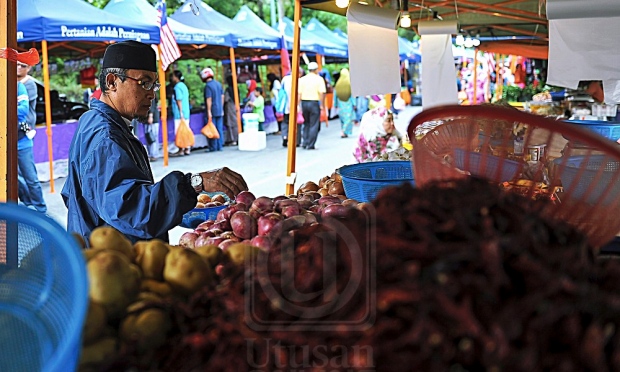
SAYA tertarik dengan satu rencana yang disiarkan di sebuah akhbar tempatan baru-baru ini yang menggambarkan kefahaman pengguna tentang pertalian yang kabur antara kos sara hidup dengan Indeks Harga Pengguna (IHP), iaitu petunjuk yang digunakan bagi mengukur purata harga barangan dan perkhidmatan yang pengguna belanja berdasarkan harga pasaran semasa, yang dinilai secara pukal.
IHP ini diterbitkan oleh Jabatan Perangkaan setiap bulan dan perangkaan tahunan diguna untuk menentukan kadar inflasi negara.
- Details
KUALA LUMPUR: Orang ramai yang akan pulang ke kampung masing-masing sempena perayaan Aidilfitri minggu ini dinasihatkan mematuhi undang-undang jalan raya bagi mengurangkan kadar kemalangan.
Naib Pengerusi Kanan Yayasan Pencegahan Jenayah Malaysia (MCPF), Tan Sri Lee Lam Thye, berkata analisis Polis Diraja Malaysia (PDRM) menunjukkan 95 peratus daripada kemalangan berpunca akibat kecuaian pengguna jalan raya sendiri.
Katanya, setiap pengguna jalan raya yang ingin memulakan perjalanan jauh wajar merancang perjalanan mereka supaya dapat tiba ke destinasi dengan selamat.
"Selain mematuhi undang-undang, mereka (pengguna jalan raya) tidak sepatutnya meneruskan perjalanan jika rasa letih atau mengantuk.
Read more: Sikap pengguna jalan raya tentukan kadar kemalangan
- Details

PETALING JAYA: An opposition party has called for Putrajaya to form a national committee to oversee any changes to the GST to ensure the welfare of the people is always protected.
Commenting on yesterday’s events – which saw an order for the imposition of GST on some 60 food items cancelled – Parti Warisan Sabah said a national committee would be the best way to ensure the GST was implemented fairly.
Intitally, it was reported that the government would subject the 6% GST on some 60 food items including bihun, spinach and potatoes, only for the customs department to announce the cancellation of the order less than 24 hours-later.
Warisan vice-president Junz Wong said that for now, the GST was to here stay, whether people liked it or not and what was important was that the tax wouldn’t be imposed on basic necessities.
- Details
Pengumuman pihak PLUS menutup 134 lorong tambah nilai pada 22 Jun hingga 2 Julai 2017 sempena cuti Hari Raya Aidilfitri bagi tujuan melancarkan pergerakan trafik merupakan satu langkah bijak bagi menangani kesesakan.
Namun begitu dari sudut lain, pengguna terpaksa membayar wang pendahuluan bagi penggunaan kad Touch n Go dilihat membebankan pengguna, apatah lagi dengan peningkatan kos, kenaikan harga barang dan persiapan raya yang memerlukan bajet melebihi daripada bulan-bulan biasa.
Lazimnya pengguna membuat tambah nilai untuk perjalanan jauh dari RM50 hingga RM200.
Wajarkah pihak PLUS mengutip bayaran pendahuluan daripada pengguna? Namun masalah kesesakan jalan raya masih tiada penyelesaian.
Malah, kemalangan yang disebabkan oleh objek asing yang berada di jalan raya seperti tayar, besi, serpihan kemalangan dan sebagainya masih berlaku.
Pada tahun 2016, Pusat Khidmat Aduan Pengguna Nasional (NCCC) menerima 25 aduan berkaitan objek benda asing yang menyebabkan kerosakan pada kenderaan mereka.
Tuntutan terhadap pihak PLUS sukar untuk diselesaikan dan pihak PLUS seolah-olah mengambil ringan terhadap isu ini.
Pengguna juga perlu ambil maklum, terdapat lokasi tambah nilai yang dikenakan caj.
Sekiranya pengguna membuat tambah nilai di kedai serbaneka seperti 7-eleven, 99 speedmart, myNEWS.com, Mydin, ATM, CDM, stesen petrol dikenakan caj sebanyak 0.53sen.
Dengan peningkatan kos sara hidup, caj-caj sedemikian turut membebankan penguna. Pihak PLUS juga harus memastikan lokasi tambah nilai terutama di stesen minyak dan ATM tidak tergendala, agar dapat memenuhi permintaan pengguna pada waktu tersebut.
Pihak PLUS seharusnya memaklumkan pengumuman ini lebih awal tiga bulan bagi persiapan pengguna.
Secara hakikatnya, manusia akan mudah lupa dan ada segelintir pengguna yang terlupa untuk memeriksa nilai baki kad.
Adakah pihak PLUS menyediakan kakitangan yang akan membantu pengguna yang menghadapi masalah tersebut?
Hal ini perlu dipertimbangkan, sekiranya pihak PLUS benar-benar untuk mengangani masalah kesesakan. Oleh itu, wajar sekiranya pihak PLUS menyediakan satu lorong tunai bagi kes-kes kecemasan seperti di atas.
Harap pihak PLUS mengambil serius kewujudan objek asing yang berada di atas lebuh raya sebelum mengambil keputusan untuk menutup lorong tunai yang sememangnya membebankan rakyat secara amnya.
SITI RAHAYU ZAKARIA adalah ketua pegawai eksekutif FOMCA.
sumber :- http://www.malaysiakini.com/letters/385660
- Details
KUALA LUMPUR - Masuk minggu ketiga Ramadan, bahang kemeriahan menyambut aidilfitri kian terasa .
Di sana sini, peniaga tidak kira yang membuka gerai atau di kedai, gedung membeli-belah mahupun yang berniaga dalam talian giat melakukan pelbagai promosi untuk melariskan jualan.
Cuma ramai yang mengeluh kerana terlebih berbelanja pada bulan Ramadan ini.
Walaupun banyak kedengaran rungutan tentang kenaikan harga barang pada musim perayaan namun sikap berbelanja masyarakat tetap tidak berubah.
Inilah realiti yang berlaku saban tahun.
TIDAK TERKESAN DENGAN KOS HIDUP YANG MENINGKAT
Kegagalan mengawal nafsu berbelanja hingga berlebih-lebihan terutama pada musim perayaan termasuk hari raya seolah-olah menunjukkan pengguna tidak terkesan dengan kos sara hidup yang semakin meningkat.
Di mana-mana sahaja, bazar Ramadan masih menjadi tumpuan. Begitu juga pasar raya dan pusat membeli belah, tidak putus-putus didatangi pembeli. Itu belum lagi mereka yang membeli-belah dalam talian.
Tabiat berbelanja berlebih-lebihan itu menyebabkan kenaikan perbelanjaan antara satu hingga tiga kali ganda berbanding bulan biasa. Perkiraannya mudah, jika pada bulan biasa perbelanjaan sekitar RM600 tetapi pada musim perayaan ia boleh meningkat kepada RM1,800.
Menurut pakar kewangan pengguna, Prof. Madya Dr. Mohamad Fazli Sabri, kenaikan itu boleh meningkat sehingga empat kali ganda memandangkan mata wang Malaysia yang semakin lemah serta kos sara hidup yang tinggi.
Pengguna bagaimanapun bagaikan tidak ambil pusing dengan kenaikan harga barang serta kos sara hidup ketika berbelanja pada musim perayaan.
Beliau yang mengkaji "Corak Perbelanjaan Hari Raya Aidilfitri Rakyat Malaysia" pada tahun lepas mendapati lebih 55 peratus pengguna berbelanja lebih satu kali ganda berbanding perbelanjaan bulan biasa manakala 22 peratus melebihi dua kali ganda dan 5 peratus melebihi tiga kali ganda daripada perbelanjaan bulan biasa.
Kajian melibatkan 700 responden yang dilakukan secara dalam talian itu mendapati majoriti pengguna iaitu 79 peratus menyediakan belanjawan khusus untuk Hari Raya Aidilfitri.
Bagaimanapun dapatan menunjukkan 82 peratus daripada mereka yang menyediakan bajet raya itu berbelanja lebih berbanding perbelanjaan mereka pada bulan biasa.
"Ini menunjukkan majoriti pengguna tidak berdisiplin dalam mengikut bajet yang telah disediakan sehingga membawa kepada peningkatan dalam perbelajaan.
"Ia akan menjadi masalah apabila pengguna terpaksa menggunakan pendapatan gaji mereka untuk memenuhi keperluan perbelanjaan pada musim perayaan," katanya kepada Bernama ketika ditemui baru-baru ini.
Subcategories
Page 152 of 232