
- Details
 Wednesday, 10 Feb 2021 08:44 AM MYT
KUALA LUMPUR, Feb 10 — Early this week, a video of J&T Express staff mishandling parcels had gone viral due to an alleged misunderstanding of bonus arrangements by the courier company. J&T Express had issued a statement, while the staff have also posted an apology video on Facebook.
Since the postal service falls under the jurisdiction of the Malaysian Communications and Multimedia Commission (MCMC), the regulatory body has issued a statement on the matter without naming the courier company.
It mentioned that they are looking into the matter seriously and have told them to provide an explanation.
The MCMC said they have also issued a stern warning to the company’s management and have urged them to take necessary steps to improve the handling of customer packages.
The statement also reminded all licensed courier companies under the Postal Services Act 2012 to adhere to the conditions and rules, especially when it comes to protecting the rights of consumers.
Any license holders that have violated any subsidiary legislation under the Act can be fined up to RM300,000 or imprisoned up to 3 years, or both.
The MCMC has also urged all consumers to understand and be aware of their rights before choosing a service from a courier company.
If there are any damaged or loss items, consumers are urged to contact the service provider to report a complaint. If you’re not satisfied with the provided solution, you may proceed to lodge a formal complaint with the commission via the Aduan SKMM portal. — SoyaCincau
Source: https://www.malaymail.com/news/malaysia/2021/02/10/mcmc-courier-companies-can-be-fined-up-to-rm300000-for-violating-postal-ser/1948557
- Details
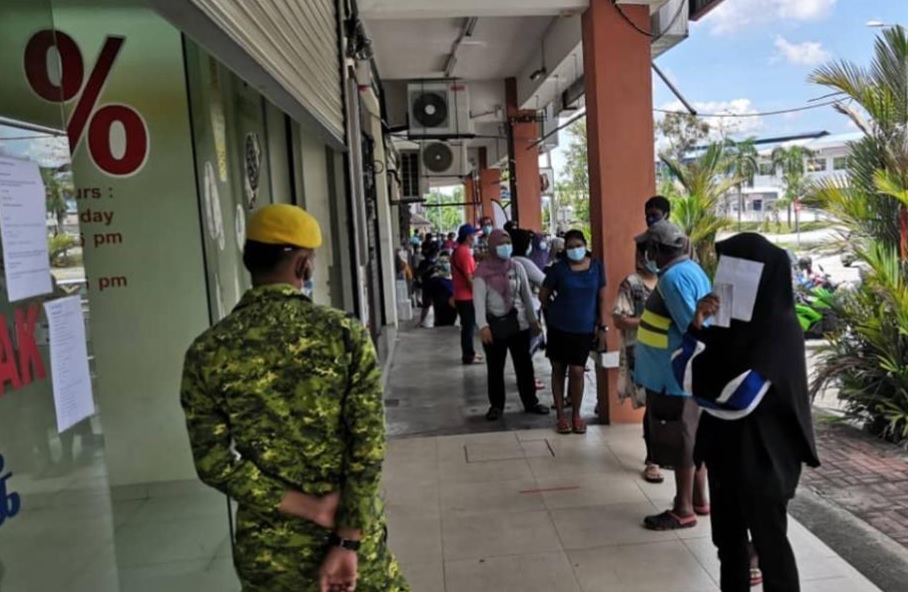 Covid-19 pandemic sees resurgence for industry but also exposes how it exploits the vulnerable
07 Feb 2021 11:30AM
BANK Negara-regulated financial institutions were required to grant a mandatory automatic six-month moratorium when the pandemic struck. Hire-purchase and credit-sales providers regulated by the Domestic Trade and Consumer Affairs Ministry were subject to moratoriums under the Covid-19 Act.
However, moneylenders and pawnbrokers regulated by the Housing and Local Government Ministry would only agree to a three-month moratorium even though the prime minister sought a six-month moratorium.
Yet, they were not subject to the Covid-19 Act. Unless this is addressed, the poor will lose even their meagre assets.
Pawnbroking is the business of advancing secured loans to persons with personal effects or household goods used as collateral and deposited with the lender until redeemed.
The items pawned are themselves called pledges or pawns, or simply the collateral, and the pawnbroker is entitled to sell this when the person who borrowed the money does not pay it back by an agreed time.
Pawnbroking is available in all countries. It is offered principally by the private pawnbroker, though at various times and in many countries, there have existed public pawnshops with nominal charges and pawn-accepting charities managed by religious bodies to cater for the poor with money obtained from gifts or bequests.
Gone are the days when pawnshops were repositories of history, holding antiques, jewellery, furniture, musical instruments, timepieces, military memorabilia, distinctive pieces of clothing and other items that had been part of a family heirloom, where one could buy or sell rare and unique items. Today, most pawnshops only accept gold items as a pledge.
Read more: Pawnbrokers: lifeline or death knell for the poor? – Sothi Rachagan
- Details
 February 7, 2021 10:59 AM
KUALA LUMPUR: The Covid-19 pandemic has disrupted the earning capacity of many Malaysians, and this could tempt some to turn to the time-tested way of raising some hard cash through tontine, which is known locally as “kootu”.
But several lawyers have advised the people to exercise caution when participating in tontine lest they be caught on the wrong side of the law.
Some aspects of how locals operate could violate Section 3 of the Kootu Funds (Prohibition) Act 1971 (Act 28), they said.
Lawyer Teeruvarasu K Muthusamy said tontine is loosely defined as a pool of money raised from contributions made by a group of individuals at regular intervals, on a weekly or monthly basis.
The money is then withdrawn from the pool by the group leader and given to a participant, mainly by a lottery mechanism to determine the sequence of distribution among the participants.
He said while playing the traditional kootu fund among friends and family is legal according to the Registrar of Societies, it can be illegal in two situations.
“It becomes an offence when the leader charges a membership fee from the participants to join the scheme. It also becomes illegal when the leader claims profits from the contributions to enrich himself,” he told Bernama.
Teeruvarasu said the other scenario that would render the activity illegal is when the fund is advertised or promoted among the general public.
Read more: Exercise caution when playing ‘kootu’ funds, say lawyers
- Details
 6 Feb 2021, 9:12 am
LETTER | The Covid-19 pandemic has accelerated the transition to cashless payments in most Southeast Asian countries to facilitate contactless transactions and further curb the spread of the virus.
Nevertheless, it is also crucial for us to be cautious because the method also has some drawbacks without us knowing it.
Indeed, cashless payment has become the most preferred payment method for both consumers and sellers in this pandemic era.
However, the blind use of cashless payments can have numerous adverse effects on people’s well-being, especially poor consumer behaviour, which is defined as a process through which an identifiable consumer group actually makes buying decisions.
Based on Accenture’s study titled “Covid-19: How consumer behaviour will change,” it is clear the crisis drives permanent changes in consumer behaviour. Consumer preferences have also been centred on the most basic needs, sending demand soaring for hygiene, cleaning and staple products, while non-essential categories are slumping.
Although it is definitely a positive thing to note that Covid-19 has triggered the high use of the cashless payment, individuals should be conscientious about its dire consequences, especially on how they spend and how much they spend on products.
Besides, the apparent factor of poor spending behaviour is that it can lead to panic buying, where individuals appear to overspend without even worrying about their financial condition.
Read more: LETTER | Beware of the dark sides of cashless payments
- Details
 February 6, 2021 @ 5:15pm
GEORGE TOWN: The Consumers' Association of Penang (CAP) has lauded statement by the Health director-general on price control to check on Covid-19.
CAP education officer N.V. Subbarow said it was a good suggestion, especially for those in the lower income group.
Currently, he said, the price of RT-PCR and RTK-Antigen tests at private clinics ranged between RM220 and RM388 and RM90 and RM170 respectively.
"If not controlled, the price may go up, just like the face mask previously.
"As such, we urged the consumers and the Ministry of Domestic Trade and Consumer Affairs (KPDNHEP) to cooperate with the Health Ministry to regulate prices for test prices.
"There must be an understanding between the ministries involved in the Covid-19 tests.
"Strict action must be taken against any private clinic that charges it (the test) expensively. Everyone has to play an important role," he said
According to Health director-general Tan Sri Dr Noor Hisham Abdullah, the Health Ministry will try to control the price of the Covid-19 tests at private clinics to make it more affordable for the public.
Dr Noor Hisham had compared the Covid-19 tests with a face mask, which saw a price increase last year following an increase in demand.
- Details
 February 5, 2021 @ 9:15am
KUALA LUMPUR: A 74-year-old retiree lost more than a million ringgit of her savings after falling victim to a Macau scam syndicate.
The elderly woman received a call on Sept 25 last year, purportedly from Pos Malaysia headquarters saying that they were holding a package containing an Identification Card (IC), a cheque book, and three bank cards under her name.
The call was then transferred to a man who introduced himself as Sergeant Fairul from the Sabah Contingent Police Headquarters. He told the victim that she was involved in a money laundering case and was under investigation.
The call was again transferred to another "policeman" named Si Wan, who threatened the victim by saying that she would be arrested and remanded if she refused to cooperate throughout "their investigations".
"Frightened, the victim obeyed all orders by the scammers and gave away her bank account information to Si Wan, and transferred RM833,000 from her Tabung Haji account into her Maybank account," Petaling Jaya District police chief Assistant Commissioner Nik Ezanee Mohd Faisal said in a statement.
He added that on Oct 5, 2020, Si Wan asked the woman to hand over her Maybank card, which he claimed was needed to withdraw the money for auditing purposes in the money laundering case she was supposedly under investigation for.
Nik Ezanee said on Oct 6, 2020, following Si Wan's instructions over the phone, the victim went to the Atria Shopping Mall and placed her Maybank card on top of a letterbox as instructed.
Read more: 74-year-old PJ woman loses RM1 million to Macau scam syndicate
- Details
 February 3, 2021 @ 2:45pm
GEORGE TOWN: The Consumers' Association of Penang (CAP) has urged consumers to be wary when buying laptops or computers (either old, refurbished or new), especially during the Covid-19 pandemic.
This was because they were potential targets for scammers or opportunists who prey on people making hasty decisions during such times.
CAP president Mohideen Abdul Kader also called on the Domestic Trade and Consumer Affairs Ministry (KPDNHEP) to continue monitoring the sales of computer and computer equipment.
He said with the emergence of online businesses and students having to study online, there had been a spike in demand for laptops or computers.
"CAP wants to caution people wanting to purchase such devices or equipment to be wary of three particular things namely scams, warranties and prices.
"Try not to purchase through social media such as Facebook or WhatsApp because it is not possible to know the reliability of the seller.
"It would be advisable to acquire a second-hand or refurbished equipment from someone you know and preferably known to be reliable. The reason is that, if there is anything wrong, you can easily find the person as compared to one who lives far away.
"There have been cases of people buying electronic items from other states only to discover that the equipment is defective," he said today.
Mohideen cited the case of a woman who had purchased a "deal of a lifetime" iPhone, only to find a rusty lock (without any key) inside the parcel she received after making payment.
Read more: CAP: Be wary when buying laptops, computers during pandemic
- Details
 Selasa, 2 Februari 2021 @ 2:42 PM
Kuala Lumpur: Seorang pekerja swasta kerugian RM3,600 selepas tersilap melayari laman sesawang bank palsu menggunakan komputer riba, kelmarin.
Azizul Osman, 38, berkata, dia melayari laman sesawang bank terbabit ketika berada di rumahnya di Bandar Baru Bangi, pada 3.38 petang.
Menurutnya, pada mulanya dia tidak menyedari laman sesawang itu bukan yang sebenarnya dan seperti biasa memasukkan kata pengguna serta kata laluan.
"Saya kemudian menerima TAC (kod pengesahan transaksi) dan dikehendaki mengisinya di dalam laman sesawang bank terbabit, saya hanya mengikut arahan itu.
"Selepas itu barulah saya sedar seperti ada sesuatu tidak kena sebelum memeriksa semula menggunakan telefon bimbit, namun terkejut apabila mendapati wang di dalam akaun bank hilang," katanya ketika dihubungi, hari ini.
Azizul berkata, terkejut dengan kejadian itu, dia kemudian terus menghubungi pihak bank untuk menyekat akaun terbabit.
"Bagaimanapun wang itu tidak dapat dikembalikan kerana difahamkan individu yang mengambil wang itu sudah menggunakannya untuk permainan dalam talian.
- Details
Selasa, 26 January 2021 @ 2:34 PM
Alor Setar: Akibat terdesak untuk mendapatkan wang, seorang wanita kerugian RM84,290 selepas ditipu dengan sindiket penipuan pinjaman wang tidak wujud pada awal bulan ini.
Wanita berusia 32 tahun yang bekerja sendiri dan masih belum berkahwin dari Kulim itu dikatakan berurusan dengan individu yang menyamar sebagai ejen dari syarikat pinjaman wang.
Ketua Jabatan Siasatan Jenayah Komersil Kedah, Superintendan Elias Omar berkata, mangsa berhubung dengan suspek melalui aplikasi WhatsApp.
Menurutnya, suspek memperkenalkan dirinya sebagai Bryan Leong dan menawarkan pinjaman wang mudah lulus.
"Mangsa yang terdesak mahu mendapatkan pinjaman bersetuju untuk membuat pinjaman wang sebanyak RM15,000 dan suspek menjanjikan kelulusan segera bagi pinjaman berkenaan.
"Selepas berjaya mendapatkan kepercayaan mangsa untuk membuat pinjaman, suspek meminta mangsa untuk membuat pelbagai bayaran seperti insurans, membuka fail, bayaran percubaan dan sistem pembayaran pinjaman," katanya dalam satu kenyataan hari ini.
Elias berkata, mangsa kemudiannya membuat pemindahan wang sebanyak 38 transaksi membabitkan 11 akaun bank yang diberikan suspek sejak awal bulan ini.
Beliau berkata, jumlah keseluruhan pindahan wang yang dibuat mangsa berjumlah RM84,290.
- Details
Selasa, 26 Januari 2021 @ 1:51 PM
Petaling Jaya: Menyamar sebagai 'rakan' atau 'saudara' dengan memberi alasan menggunakan nombor telefon baharu. Itu taktik penipuan dalam talian menyebabkan kerugian RM250,000 yang dikesan di daerah ini sejak tahun lalu.
Ketua Polis Daerah Petaling Jaya Asisten Komisioner Nik Ezanee Mohd Faisal berkata, dalam keadaan negara berdepan pandemik Covid-19, ramai mencari jalan pintas untuk mendapatkan wang dengan cara mudah.
Menurutnya, setakat inu pihaknya menerima sebanyak 78 laporan polis berhubung penipuan urusan pinjaman wang dalam talian sejak Januari tahun lalu sehingga kini.
Katanya, kebanyakan kes penipuan itu menggunakan modus operandi menyamar sebagai rakan atau saudara bagi urusan pinjaman wang.
"Berdasarkan keterangan daripada mangsa-mangsa, suspek mulanya akan memperkenalkan diri sebagai 'rakan' atau 'saudara' dan memberitahu nombor telefon yang digunakan itu adalah nombor baharu kerana nombor telefon asal hilang.
"Malah, suspek turut berjaya memperdaya mangsa dengan meniru suara sebenar atau mirip suara rakan atau ahli keluarga mangsa," katanya dalam satu kenyataan, hari ini.
Nik Ezanee berkata, suspek menggunakan profil WhatsApp memaparkan gambar rakan mangsa membuatkan mereka bertambah yakin bahawa rakan terbabit sedang dalam kesusahan dan ingin meminjam wang.
Subcategories
Page 41 of 232